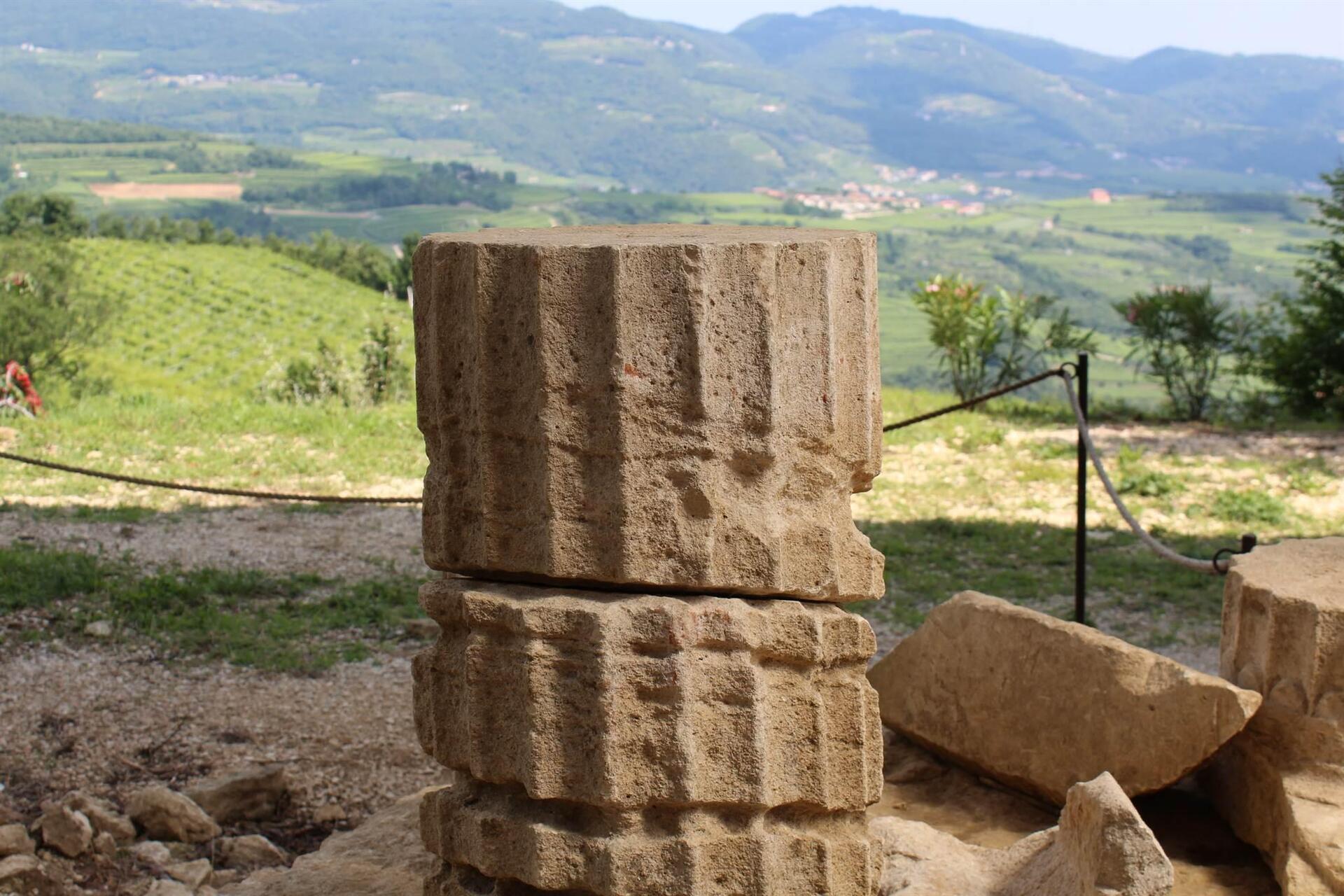
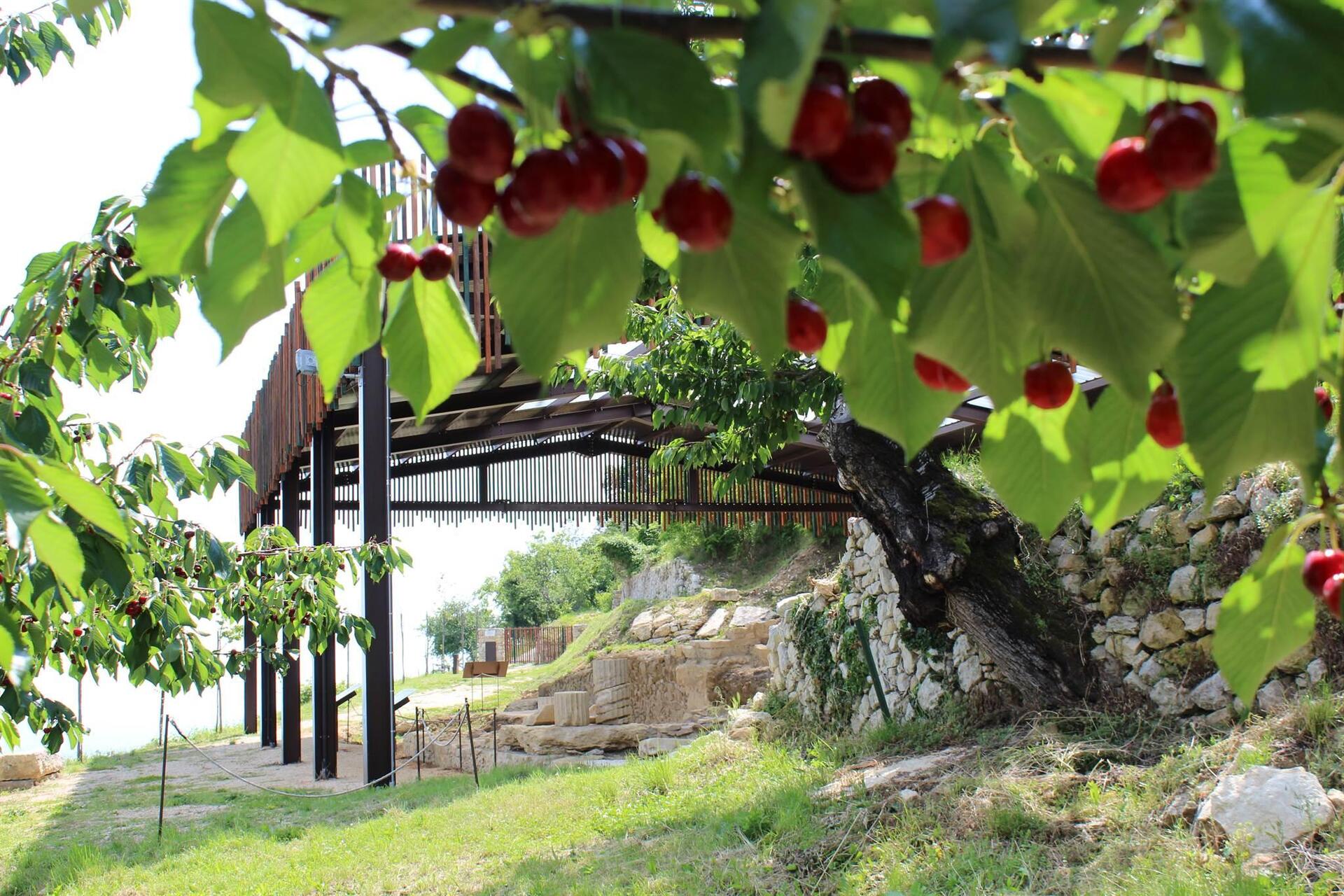
The archaeological site, considered one of the most important in northern Italy for its particular combination of scientific interest and environmental suggestion, was identified and brought to light with excavations conducted in 1835 by Giovanni Girolamo Orti Manara.
Fundamental was, at the time, the discovery of some votive inscriptions in Latin on stone, which repeatedly reported a dedication to the goddess Minerva and which made one think of an entitlement of the entire structure to this divinity, certainly for the Roman imperial age (from the 1st century BC). Subsequently, the abandonment and construction of the terraces and dry stone walls typical of the Valpolicella hills ("marogne") again covered the Temple of Minerva, also making it lose the location of the place where it was to be found. In recent archaeological excavations, it was possible to verify the presence of a multi-layered site, with the presence in the same place of significant traces of three different periods of frequentation.
A first place of protohistoric worship, active since the 6th century BC, is testified by the presence of a votive stake, known in the Rhaetian and Alpine area with the name of "Brandopferplätz".
The remains of a late-republican Roman cult structure, probably built towards the end of the 2nd century, were then highlighted. B.C. and to which numerous fragments of wall decoration must have belonged, which represent the most important discovery of the entire series of excavation campaigns: a series of elements of painted plaster and stucco ascribable to the so-called "The Pompeian style".
The third and final phase is the one that had already been highlighted by the 19th century excavations, that of the imperial age: a construction dating back to the end of the 1st century BC, active at least until the 5th century. A.D., with a typical structure of a temple of Celtic tradition, consisting of often basement structures and almost completely in Lessinia stone. Absolute peculiarity is also the presence of a part of the wall made with the so-called technique opus reticulatum, almost completely absent in northern Italy if not on the terraces of Teatro Romano of Verona, which suggest a commission of high rank and culture, with central-southern Italic influences.
All three structures were built one on top of the other, apparently without continuity, each taking advantage of the position and material of the previous era.
The archaeological area has not yet been fully investigated and it is believed it may still reveal interesting emergencies in a future excavation campaign.
Taken from the CTG Valpolicella Genius Loci press release of 14 June 2020.