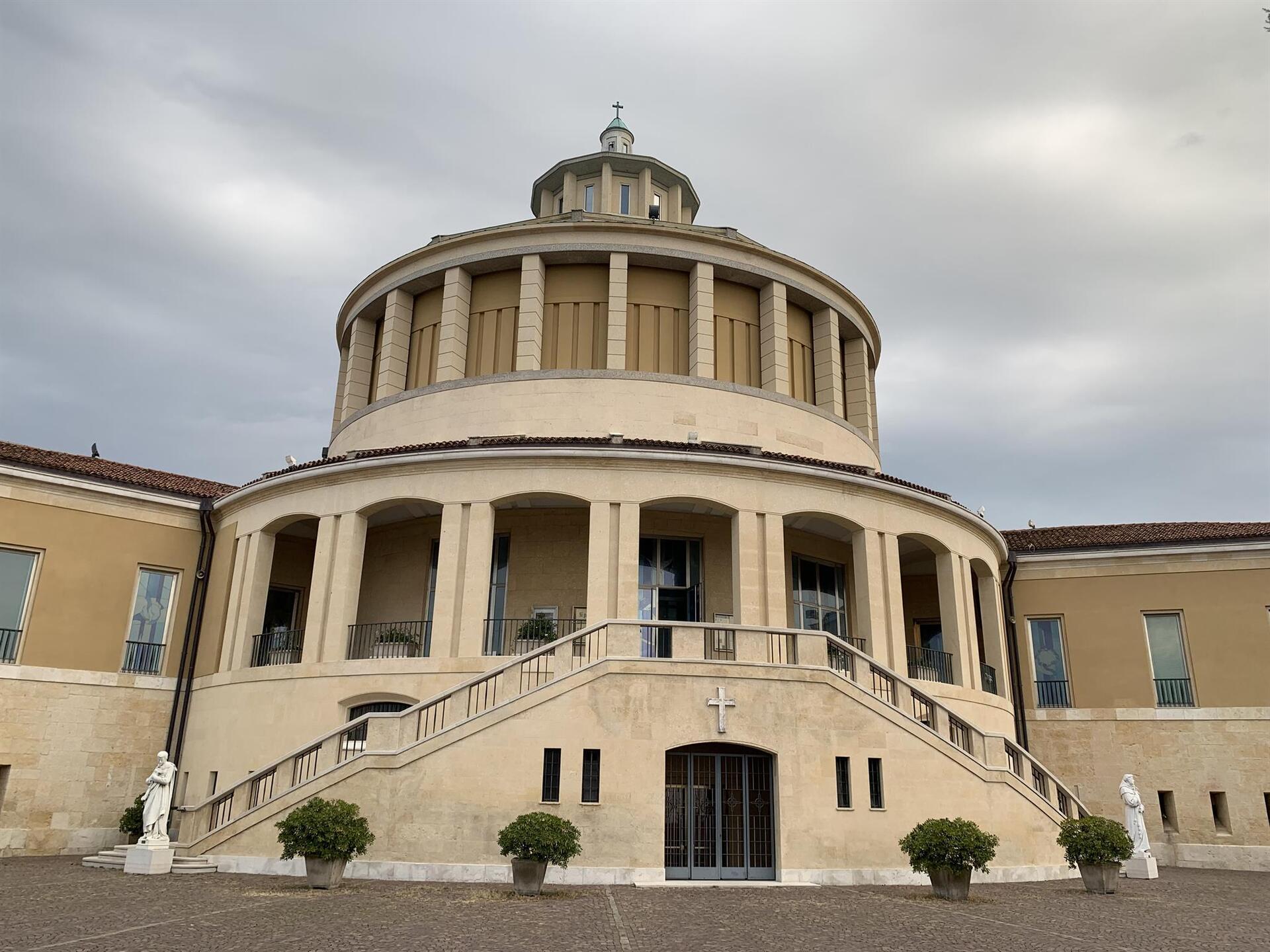
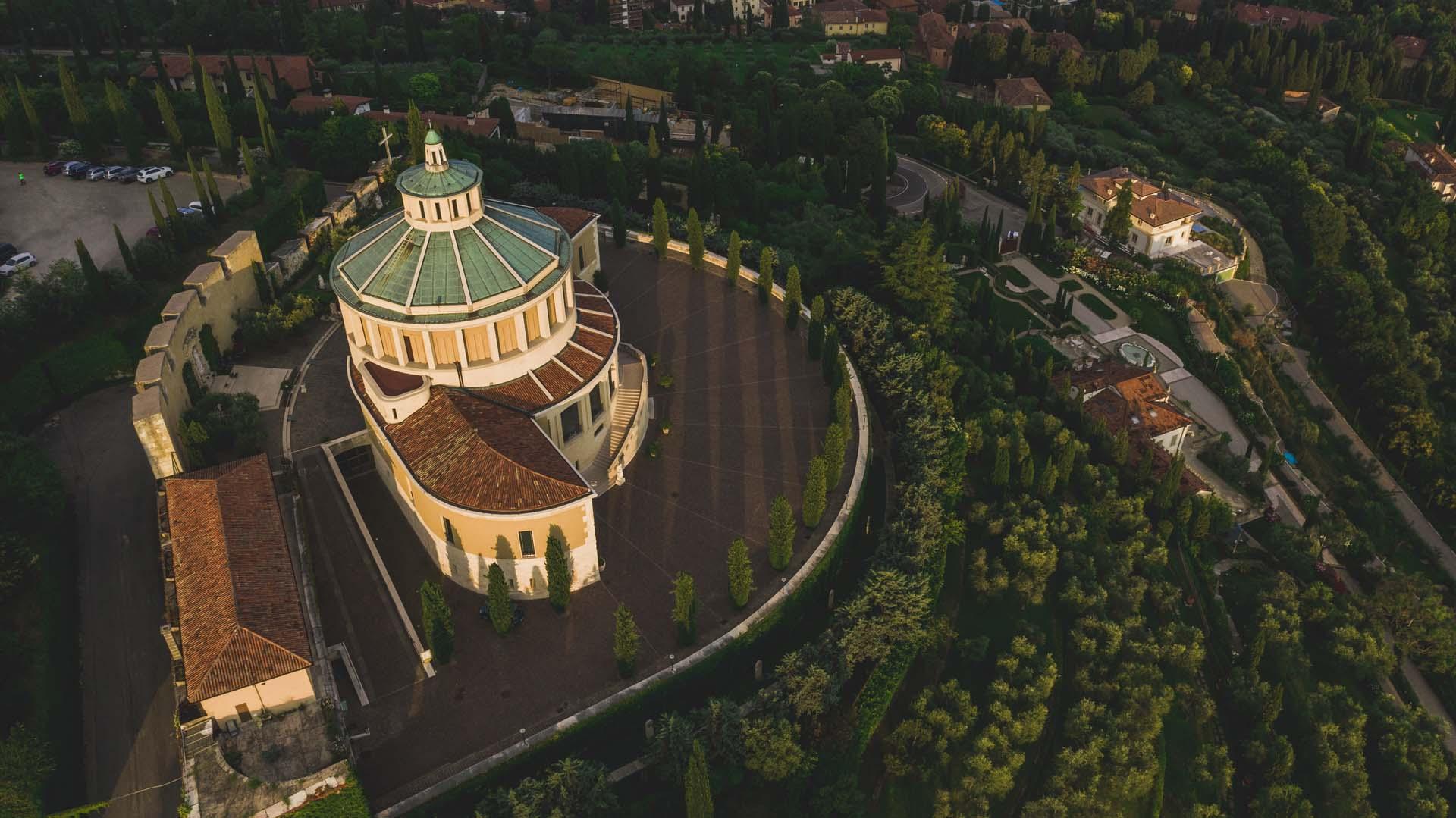
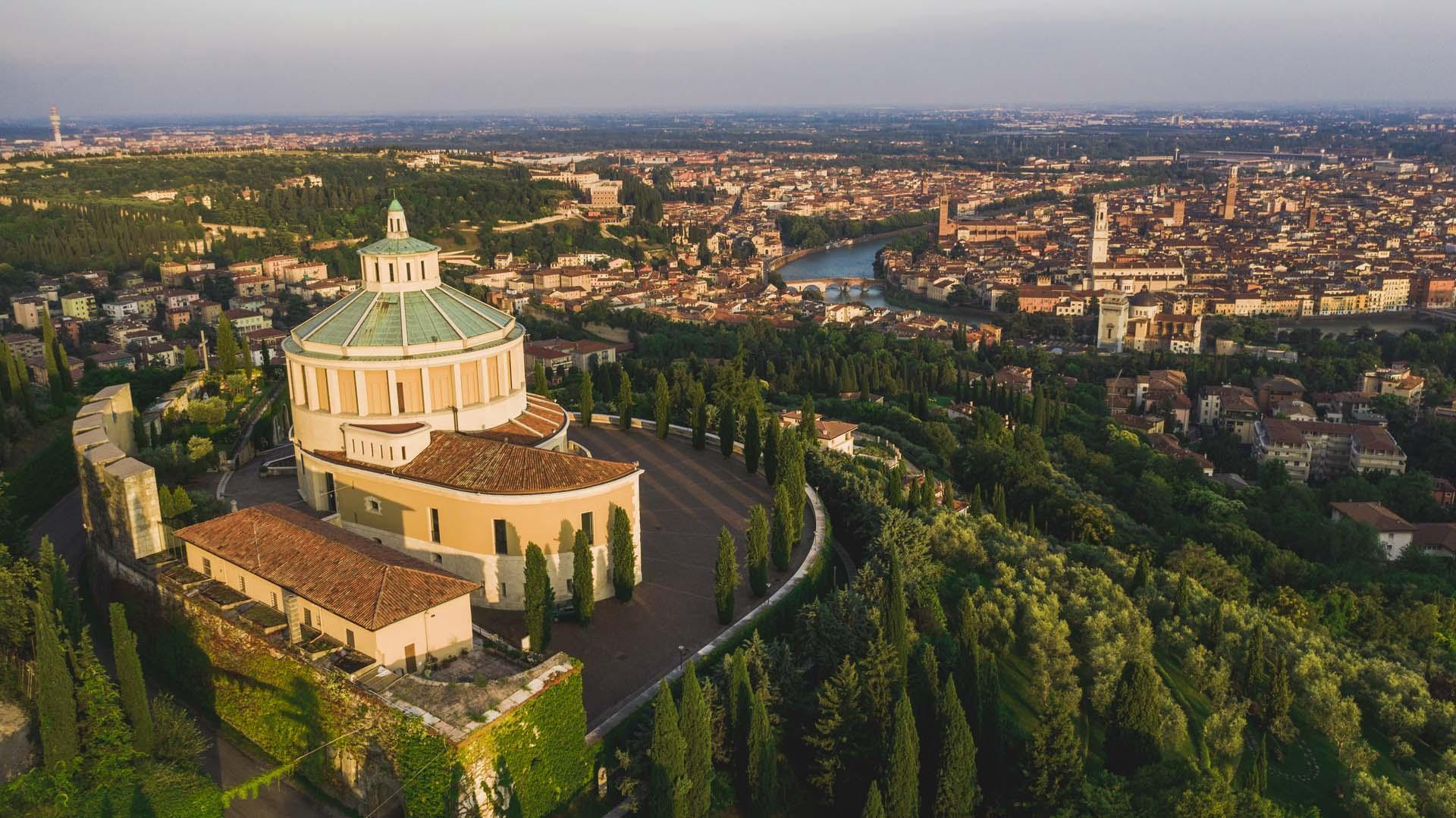
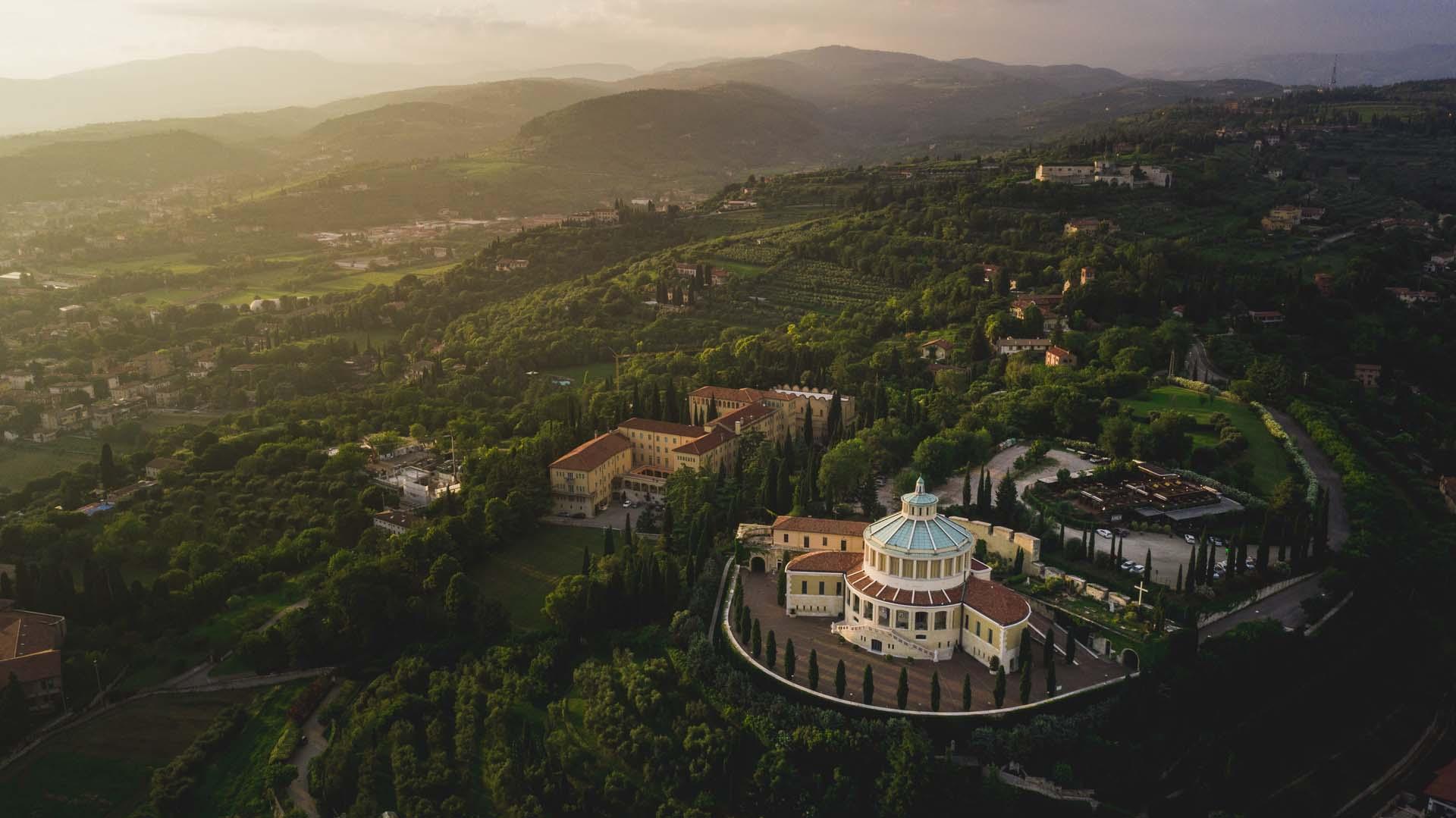
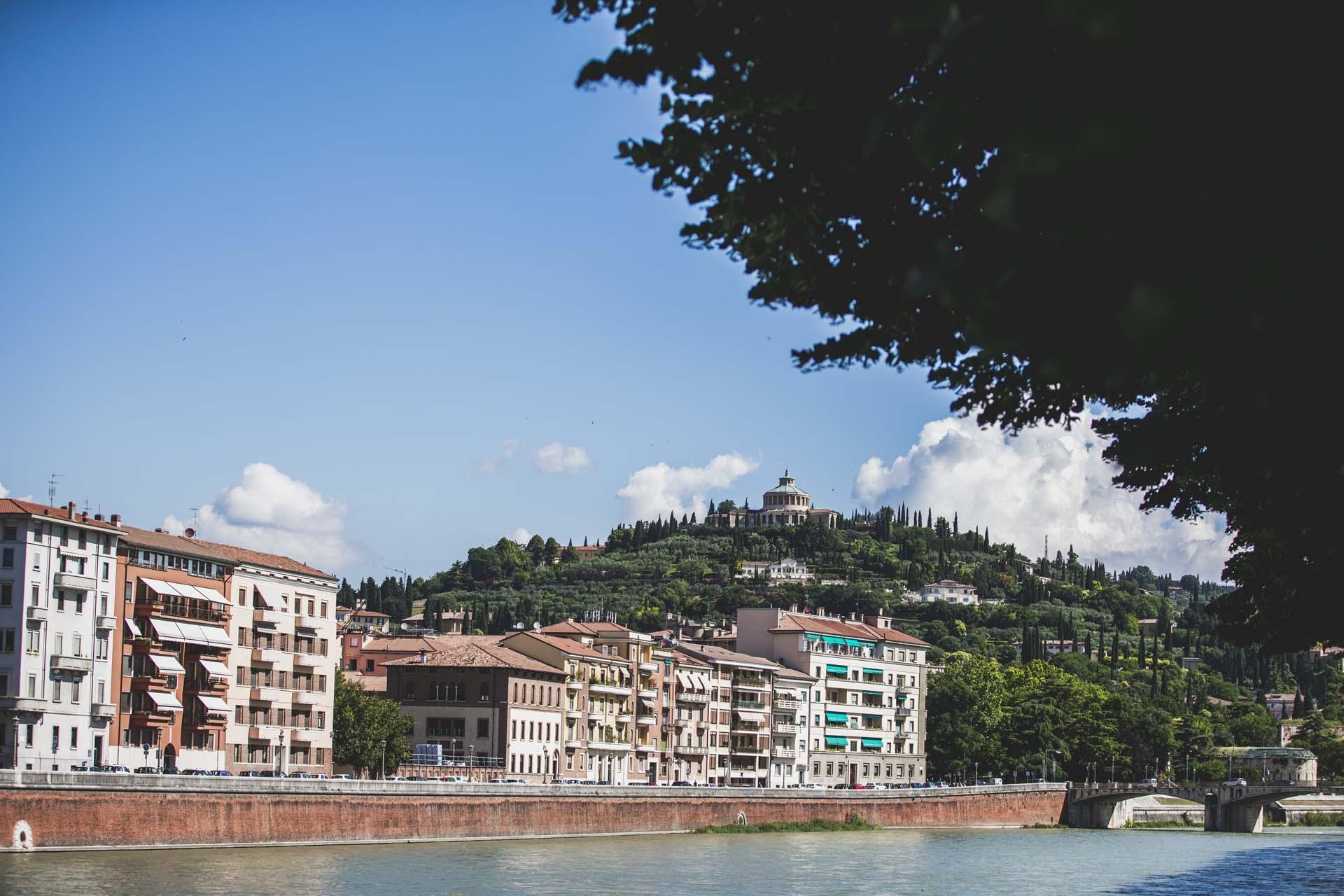
The Sanctuary of Our Lady of Lourdes rises in Verona on the hill San Leonardo from the name of the ancient monastery and church dedicated to the protector of prisoners (12th century).
At the end of the eighteenth century, the ancient complex was sold and in 1838, on the top of the hill, the fort San Leonardo was built as part of the defence constructions commissioned by Archduke Maximilian of Austria. It was used later, from 1943 to 1945 by the Nazi-Fascists as a political prison.
The sanctuary was originally located in the Stimate complex, in Cittadella area: it was destroyed by a bomb in April of 1945, but the statue of the Virgin, made by the sculptor Ugo Zannoni in 1908, was miraculously unharmed. A few years later, the order of the Stimmatini decided to erect a sanctuary where previously there was the Austrian fort of "San Leonardo": a place tied to the war that was changed instead of peace and blessing.
In 1958 the fort was transformed into a sanctuary designed by architect Paolo Rossi de' Paoli. The new church, circular in shape, was later enriched by bas-reliefs with the Mysteries of the Rosary by the sculptor Vittorio Colbertaldo and numerous paintings by the Roman painter Aronne Del Vecchio.
The structure is tied also to a legend: someone tells that a woman, mother of three children and ill with a heavy ischial sickness, had continuous pains to the legs and was very much depressed for the state in which she was. Each day she was going to take the water from the fountain of the new sanctuary and as a rule it was praying Madonna Immacolata. One morning, his physical state got worse. As the last prayer before the death wanted the bishop to consecrate it during the setting. It ended up suddenly there were no more pains from which it was suffering any more; it had healed completely.
His interior has undergone different remaking. Today it is possible to visit the Chapel of the Adoration, the artistic glass doors and the statues that since the beginning of 1900s have occupied the sanctuary.


 ${item.descriptiveTime && item.descriptiveDate.endsWith(item.descriptiveTime) ? item.descriptiveDate.slice(0, -item.descriptiveTime.length).replace(/[\\s/,-]+$/, '') : item.descriptiveDate}$

 ${item.regionTag}$
 Website