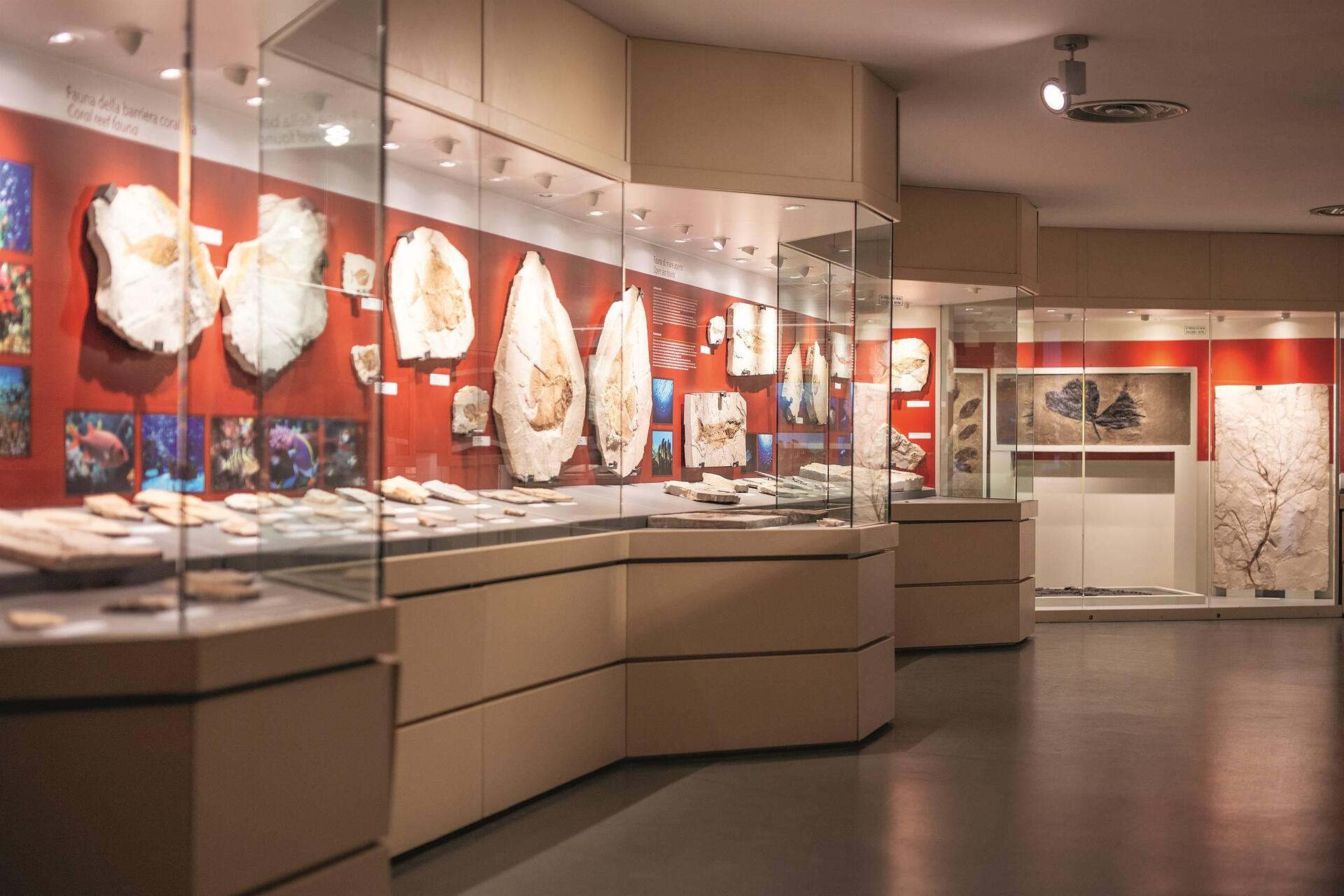
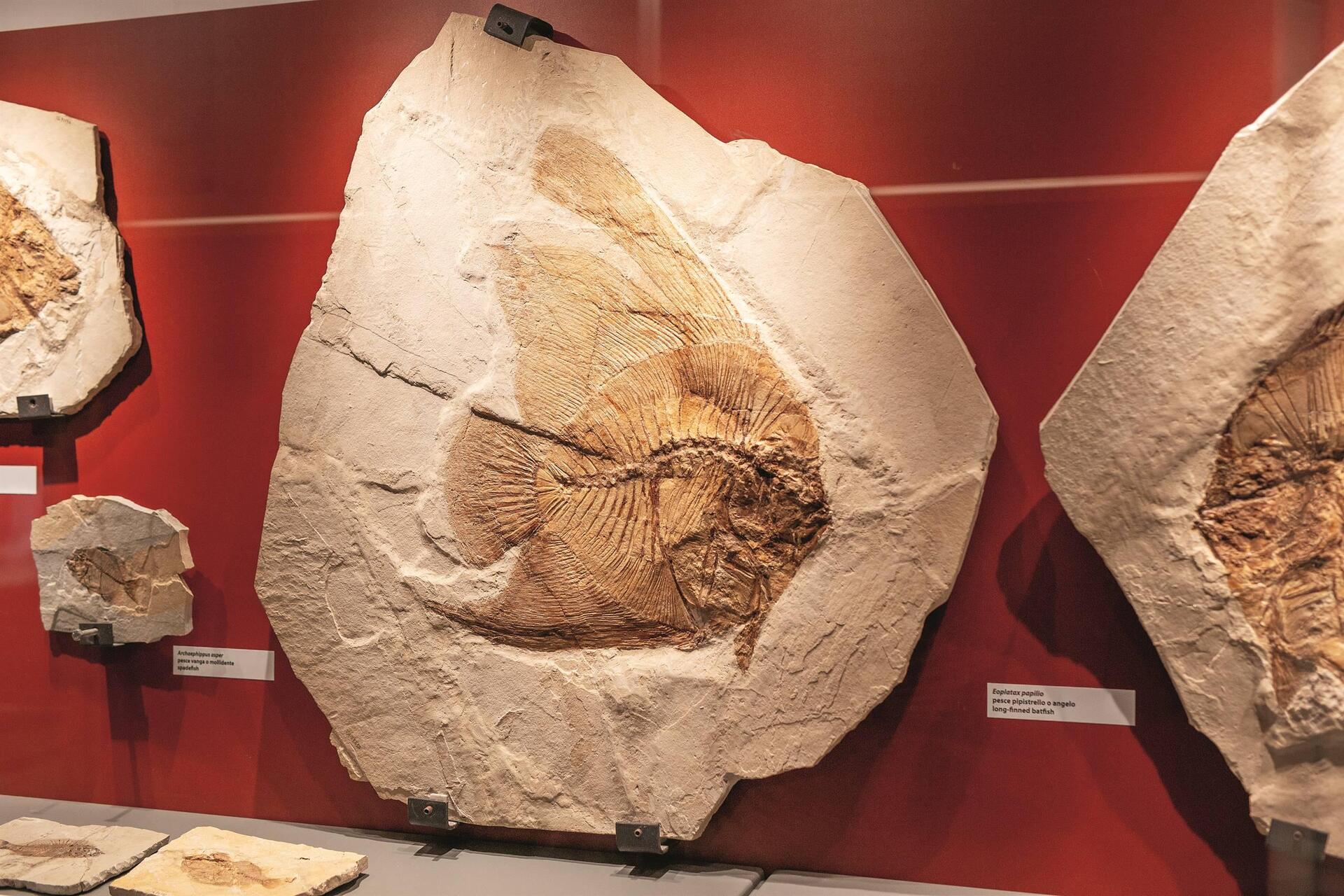
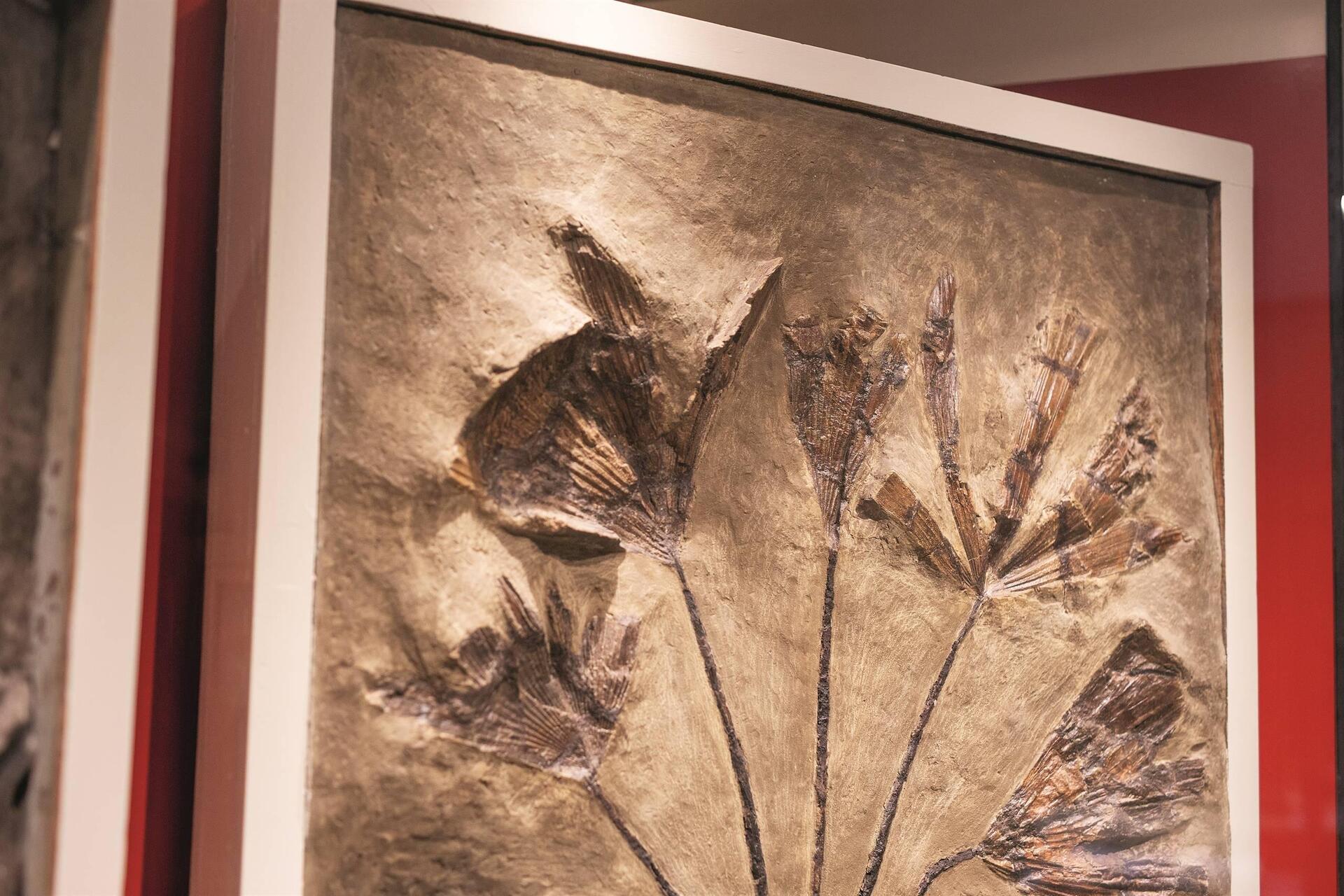
This is one of the most spectacular museum exhibitions, not only nationally, with more than 500 fossil specimens, mostly of fish, but there are also true rarities of crustaceans, mollusks, insects, palms, coconuts, and other plants, all dating back to the Middle Eocene, a period between 50 and 48 million years ago.
The findings reflect a marine-coastal habitat and more specifically a lagoon type. Among the various fossils, one can enumerate crustaceans, reptiles, some bird feathers, various species of insects, but, in particular, over 150 species of fish, including sharks and even, as a testament to the unique fossilization process that occurred here, jellyfish.
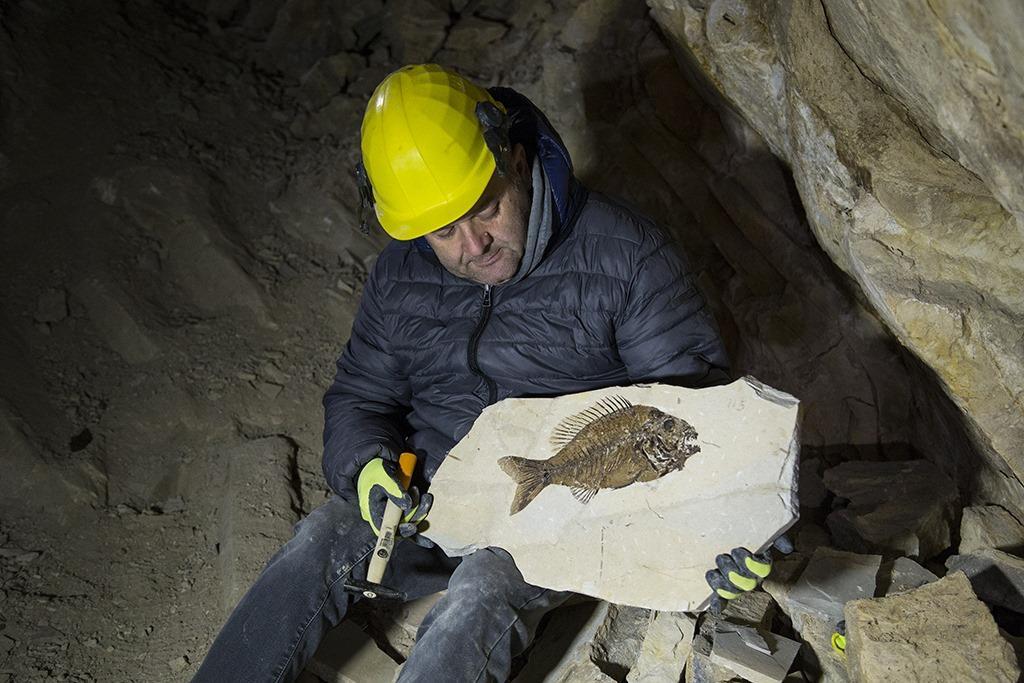
The plant species found, over 270, include tropical plants, algae, palms, and marine flowering plants. The fossils were not only found in the Pesciara quarry-mine but in various sites, each with its own geological history, in some cases known and quarried for several centuries (not by chance, the fossils of Bolca are present in major Museums around the World and in rich private collections).
The main protagonists of this museum are the fish: live fish swimming in two aquariums and fossil fish.
The Museum, which extends over an area of about 700 m2, features three large exhibition spaces arranged over two floors. The museum path can be experienced at multiple levels. The simple viewing of the displayed artifacts can indeed be aided by reading texts, watching a video, and large panels that illustrate some reconstructions of the ancient environment of Bolca.
The two large marine aquariums with Mediterranean and tropical environments on the ground floor allow for the comparison between current faunas and those that lived 50 million years ago.
On the upper floor, however, the great variety of fauna and flora from the Pesciara and Mount Postale is emphasized. Fish, lobsters, shrimp, crabs, jellyfish, bird feathers, insects, worms, terrestrial plants, etc., are divided by environments and accompanied by numerous color images.


 ${item.descriptiveTime && item.descriptiveDate.endsWith(item.descriptiveTime) ? item.descriptiveDate.slice(0, -item.descriptiveTime.length).replace(/[\\s/,-]+$/, '') : item.descriptiveDate}$

 ${item.regionTag}$
 Website