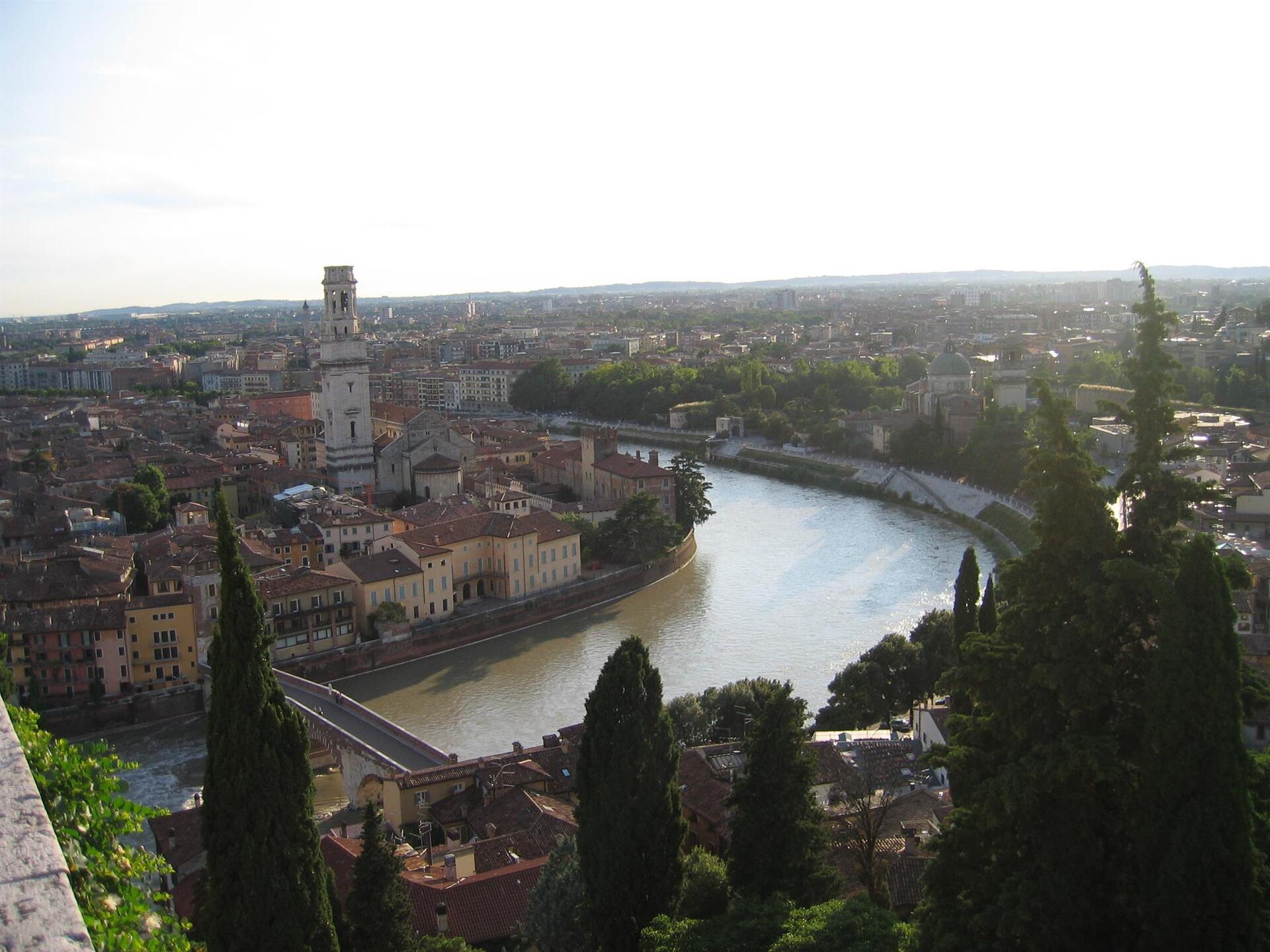
Porta Fura is our starting line, along the Adige river near the bridge Ponte Risorgimento, where the ruins of the scaliger fortifications along the right bank of the river (1320-21) are best preserved.
In the middle of the river we can see the Torre della Catena, which was hooked into the buttress of the city walls in order to control the navigation. Along the river bank there are city walls and gates of different ages: Porta Fura, the most antique from the city-republics time, the Scaliger Porta Catena and, between the two gates, there are the 19th century caponeria (casemate) and the walls by which the Austrians, still saving the most antique parts, turned the whole thing into a bastion, or half of it. We go ahead along the right bank of river Adige, heading toward the neighborhood of San Zeno, walking trough via Pontida and proceeding all along via del Bersagliere.
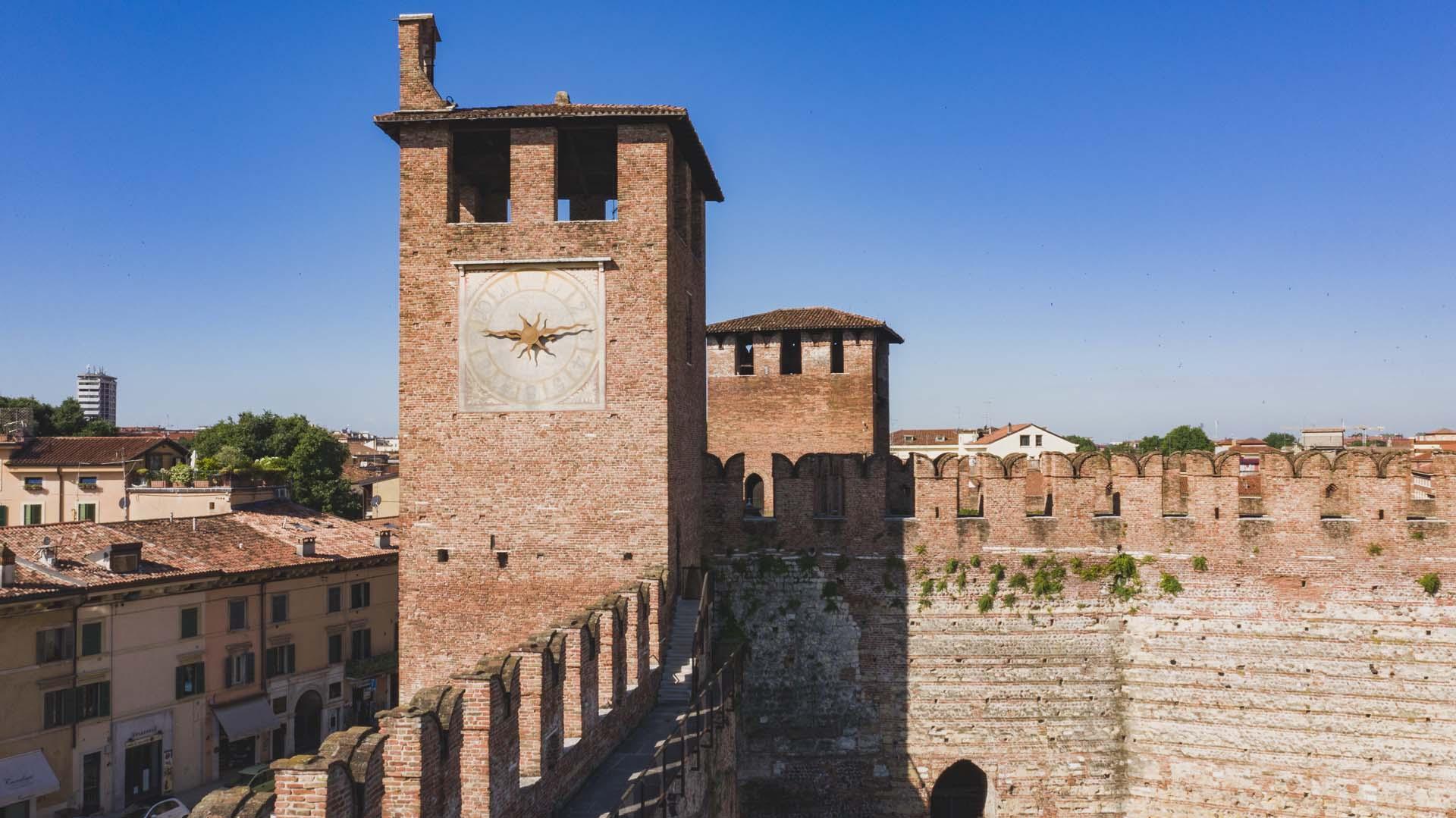
Walking on and along the massive wall still called “regaste” and which at the time of Alberto the 1rst della Scala was the word meaning the crenellated wall set at defence from the floods coming from the river and defending from enemies, Calzaro leads us to Castelvecchio. The castle was built in 1354, thirty years after the city walls of Cangrande the 1rst. In the museum inside the castle we can see the memorial stone which originally was laid at the main entrance which, for a long time was called porta del Calzaro. Littler over, beneath the statue of Cangrande, lord of Verona, we can see the ancient porta del Morbio, which, before the castle was built, was the way out the city walls.
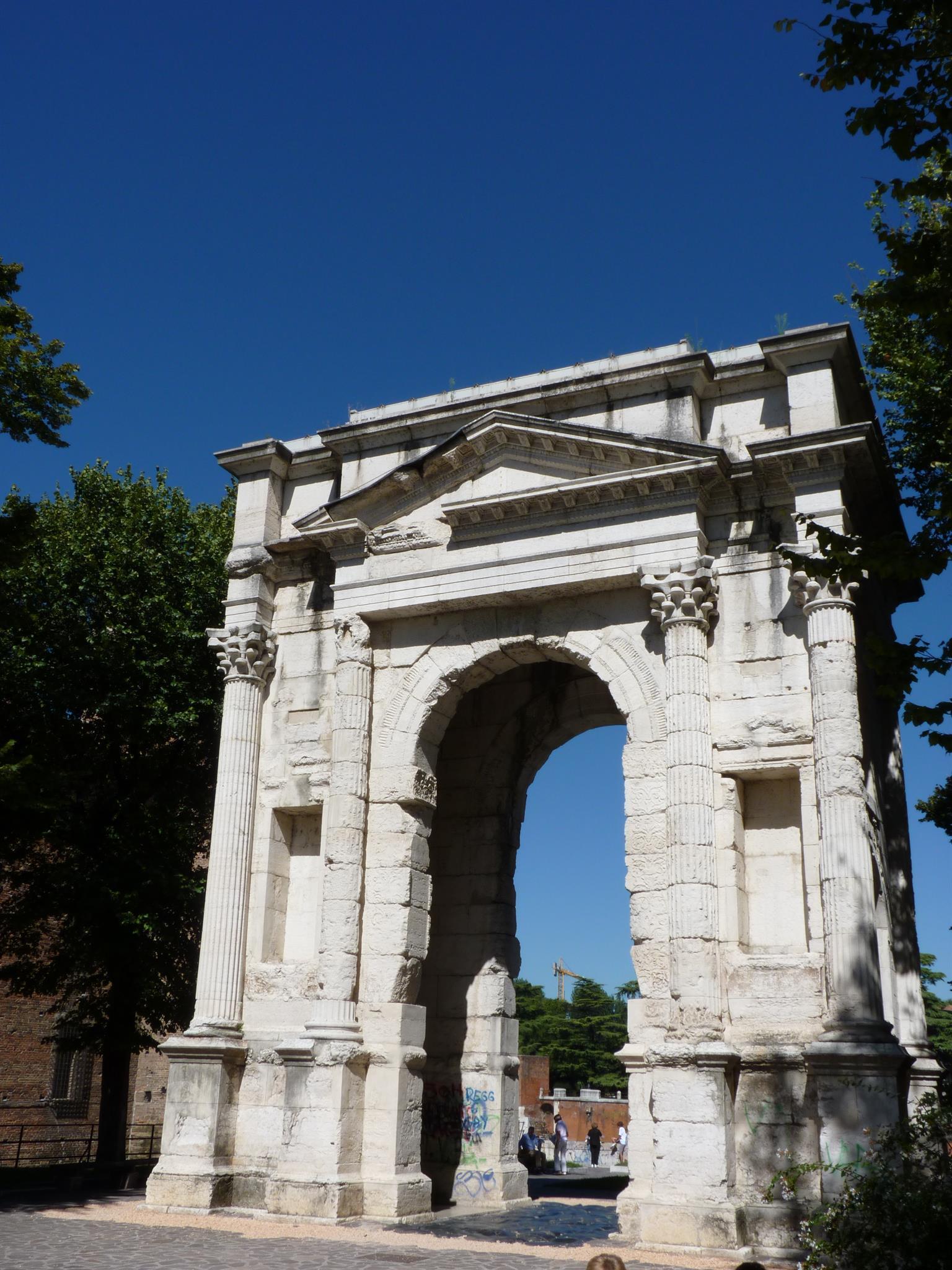
Outside Castelvecchio, beneath the clock tower, some paving tones among some blocks of porphyry of the street, show the spot where the arco dei Gavi ( the Gavi’s arch ) was placed and which was included into the city walls turning it into a door. The arch was demolished during the french occupation and, much later, it was rebuilt nearby the castle.
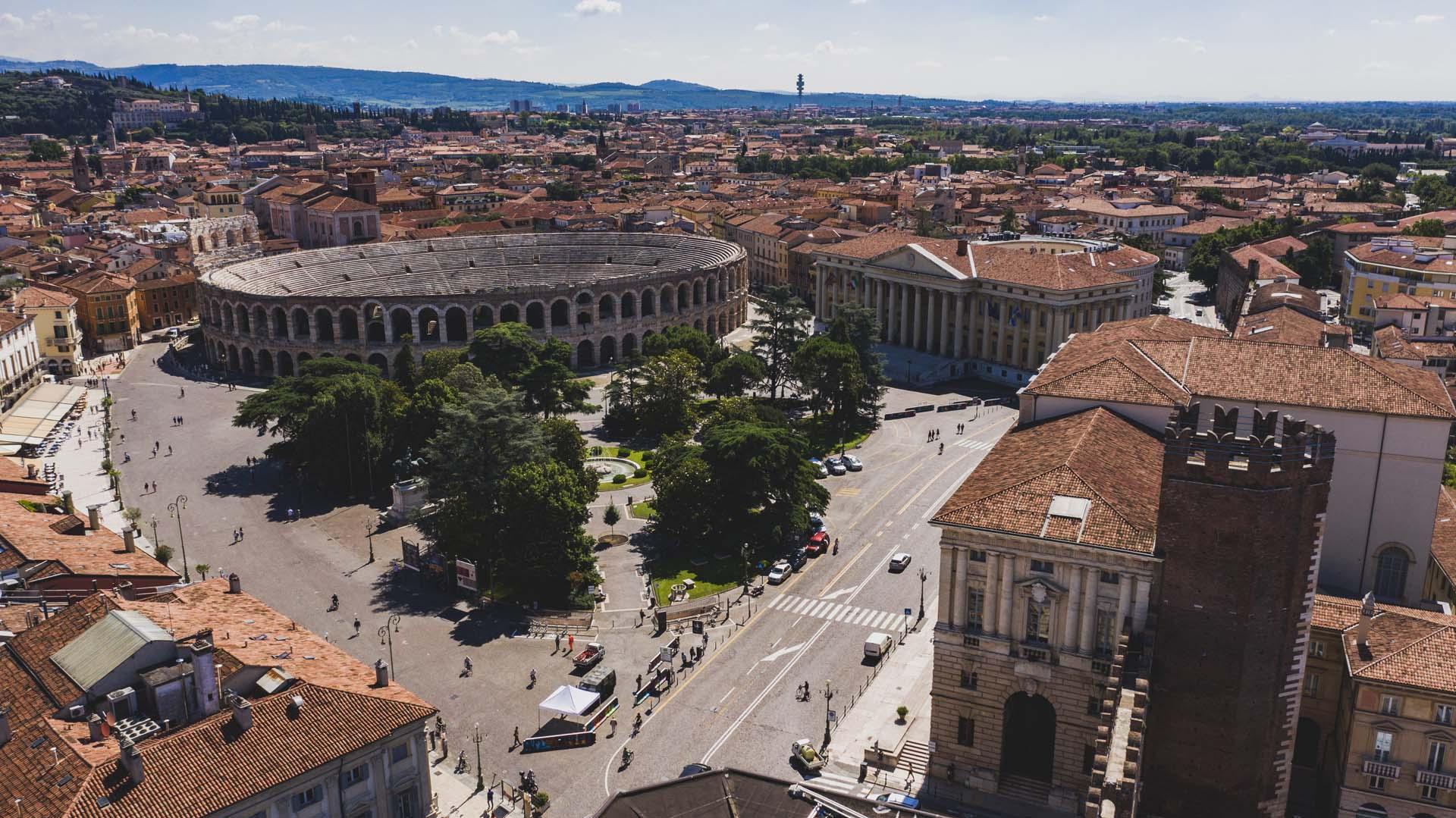
To find more city walls of the municipal time, walls which were later reinforced by the Scaligers and by Visconti, we must reach Piazza Bra and the great portoni (the main gate) leading to Corso Porta Nuova.
As we walk ahead and leave the palace of Gran Guardia on our right side, we keep going along the city walls till we reach the river Adige. We will note how the crenel is facing the town due to Gian Galeazzo Visconti, Duke of Milano and Lord of Verona who used these walls to build the cittadella, a fortification inside the conquered town. Almost at the end, above the arch of porta Rofiolana, we can see the torre di Alberto.
Just across the bridge ponte Aleardi, overlooking the river Adige, we can see the buttress built and added to the old Alberto’s wall (1287-1387) by Antonio della Scala, the last Scaliger lord. There is nothing left of the medieval Porta Vittoria, however the name of the Austrian porta Vittoria Nuova, still reminds of the battle of Cangrande the 2nd against Fregnano, his stepbrother who was defeated and killed here (1354).
Besides the few traces left by the the Venetians and the Habsburgs, in order to find again the city walls of Cangrande the 1st and of Calzaro, we should go through the district of Veronetta, along the way of Fiumicello which is nowadays no longer visible, along the streets of via Università, Mazza, Colombine alley, via XX Settenbre, Terrà alley, via S. Nazaro, scala XVI ottobre. On top of the stairs we turn right, through the new garden to reach the Scaliger tower number 14 (according the austrian numbered list of the fortified constructions) where the Venetian 16th century wall would join the medieval Scaliger city wall.
Here, Calzaro shows us the construction steps of this defensive bulding, majestic for that age: the escavation of the fortification, the building of the crenellated wall and of the towers. Going out of the breach of the street, right before Batteria Scarpa of the 1800s, we go for a short way along the entrenchment, admiring the impressive size of the high wall climbing the hill, returning back trough the small pedestrian breach and continuing our way inside along wall.
Past the 16th century rondelle added to the city wall and to the Scaliger towers by Venice, we finally reach the top of the hill where we find Castel San Felice, which was started to be built in 1390 by Visconti and completed with the two rafters by wish of Capitani Francesco Maria and GuidoBaldo della Rovere, of the Republic of Venice.
Going downhill we can walk along the perimetre of the city walls which are caracterized by the Venician fortifications Bacola and Boccare. We then reach the breach of Castel San Pietro and the district of Valdonega. We can otherwise follow the ancient path which, from the rondella della Grotta where in the ancient time there was another Scaliger gate, leads to Fontana del Ferro and to the district of San Giovanni in Valle.


 ${item.descriptiveTime && item.descriptiveDate.endsWith(item.descriptiveTime) ? item.descriptiveDate.slice(0, -item.descriptiveTime.length).replace(/[\\s/,-]+$/, '') : item.descriptiveDate}$

 ${item.className === 'event' ? item.city : item.regionTag}$
 Website