The Villafranca Castle is a medieval structure that has survived to the present day through various modifications over the centuries.
Its construction began in 1201, following the designation in 1185 by the Municipality of Verona of the local settlement as Borgo Libero (Libero Pagus), and after the Battle of Ponti dei Molini (near Mantua). It was completed in 1202. Destroyed and burned by the army of Ezzelino da Romano in 1232, it was rebuilt in 1243, when Enrico III da Egna, the podestà (the governor) of Verona, ordered the erection of the main tower.
Initially a defensive fortress, probably more modest in size, over time it became an integral and strategic part of the Serraglio Scaligero defensive system, which stretched largely along the Tione River, channeled for defensive purposes into the moat still visible since the town’s foundation. From Villafranca, it extended northwest to the small castle of Gherla and then to Valeggio sul Mincio, and southeast toward the marshlands of Grezzano. On the left bank of the Tione, along the Serraglio itself and facing the south side of the castle, stood the Portòn, the only access to the town along the fortified line.
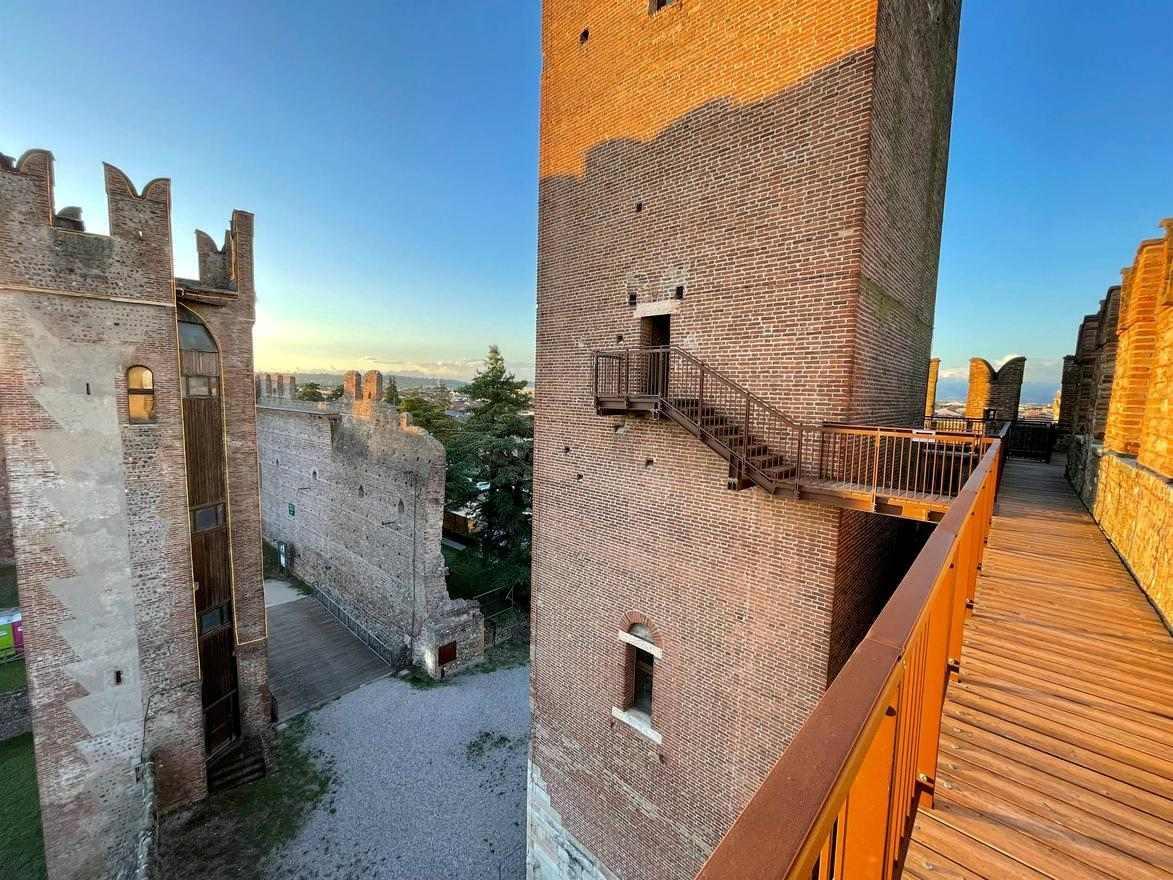
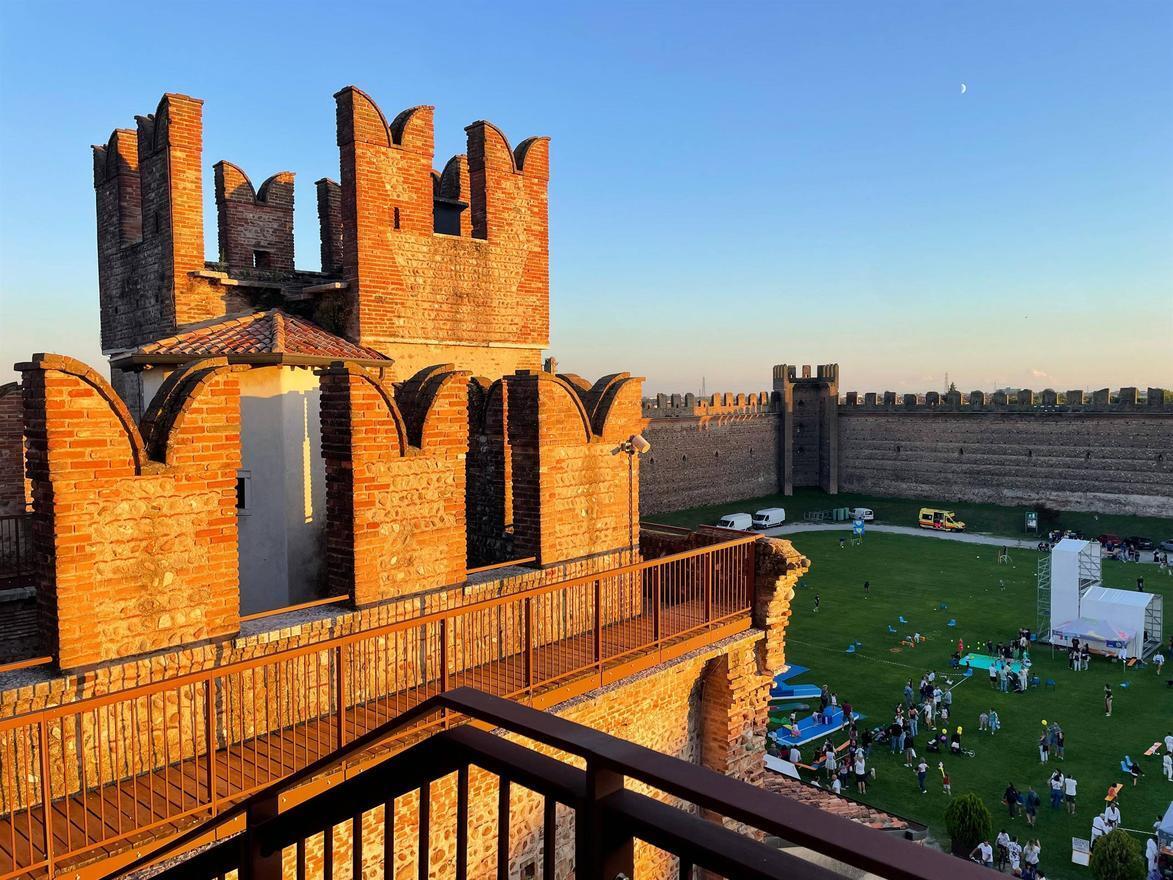
Located along the ancient Roman consular road Via Postumia, south of the town, at the height of its splendor the fortress featured a main square-plan structure, seven small towers called Torresine, open on the inner side facing the armory courtyard. The stronghold included two shielded towers and the keep tower with two rivellini giving access to the inner walled court, while on the north side it directly overlooked the main road toward Verona.
With the advent of the Republic of Venice in 1405, by the late 15th century the Scaligero castle began to lose its strategic importance and, over time, was used only as a garrison during emergencies or as a customs enclosure. The surrounding lands were later purchased by private owners, and the armory courtyard was converted for agricultural use.
In 1882, the keep and the prisons were acquired by the Municipality of Villafranca, and in 1890 the main tower was restored with the addition of a clock. Following the collapse of the southeast corner tower in the early 1900s, after lengthy preparations involving the expropriation of the inner courtyard from private owners and the difficult securing of state funds, major restoration works began in 1926. These included the reconstruction of the fallen tower, reinforcement of the walls and battlements, culminating in 1935 with the restoration of the bastions, followed by the filling in of the outer moats and the planting of pines, firs, and plane trees to create public gardens.
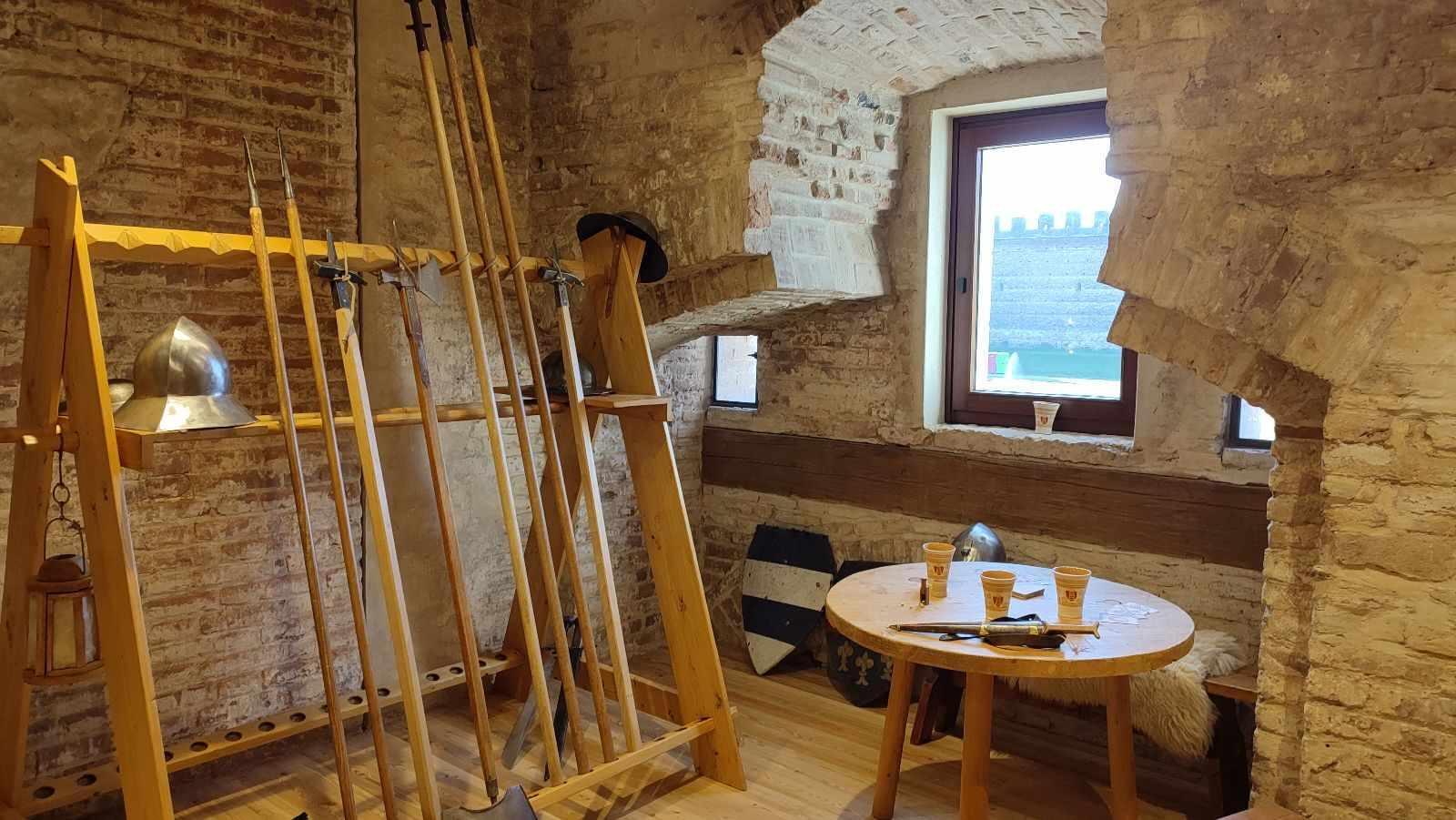
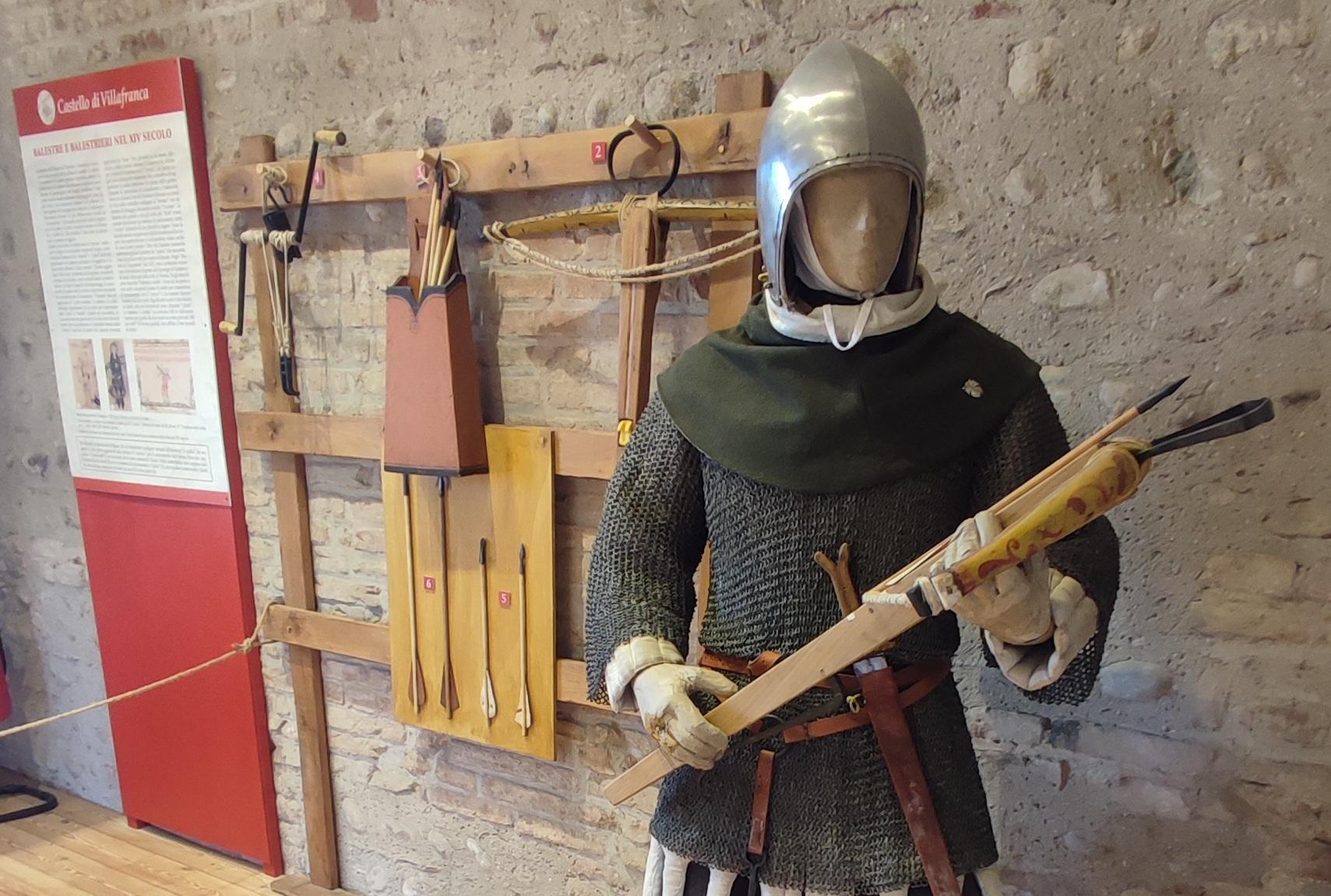
In 2023, the castle underwent major restoration work that made it possible to visit the interior rooms and a new walkway route, with exhibits in the halls illustrating the medieval civil and military life of the Scaligero Castle.


 ${item.descriptiveTime && item.descriptiveDate.endsWith(item.descriptiveTime) ? item.descriptiveDate.slice(0, -item.descriptiveTime.length).replace(/[\\s/,-]+$/, '') : item.descriptiveDate}$

 ${item.regionTag}$
 Website