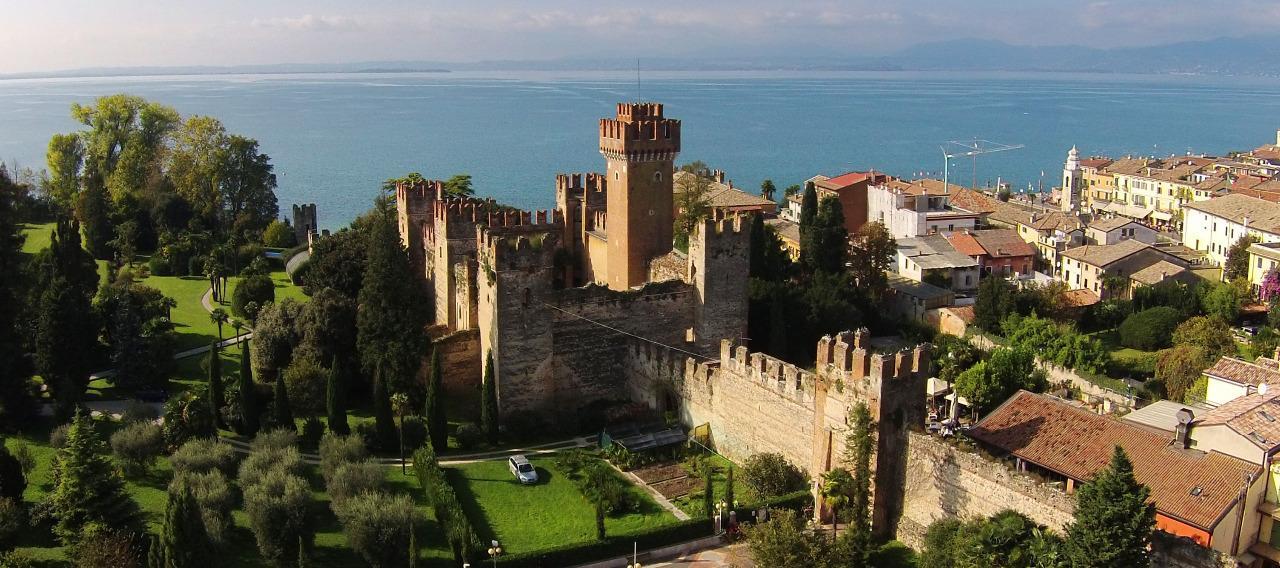
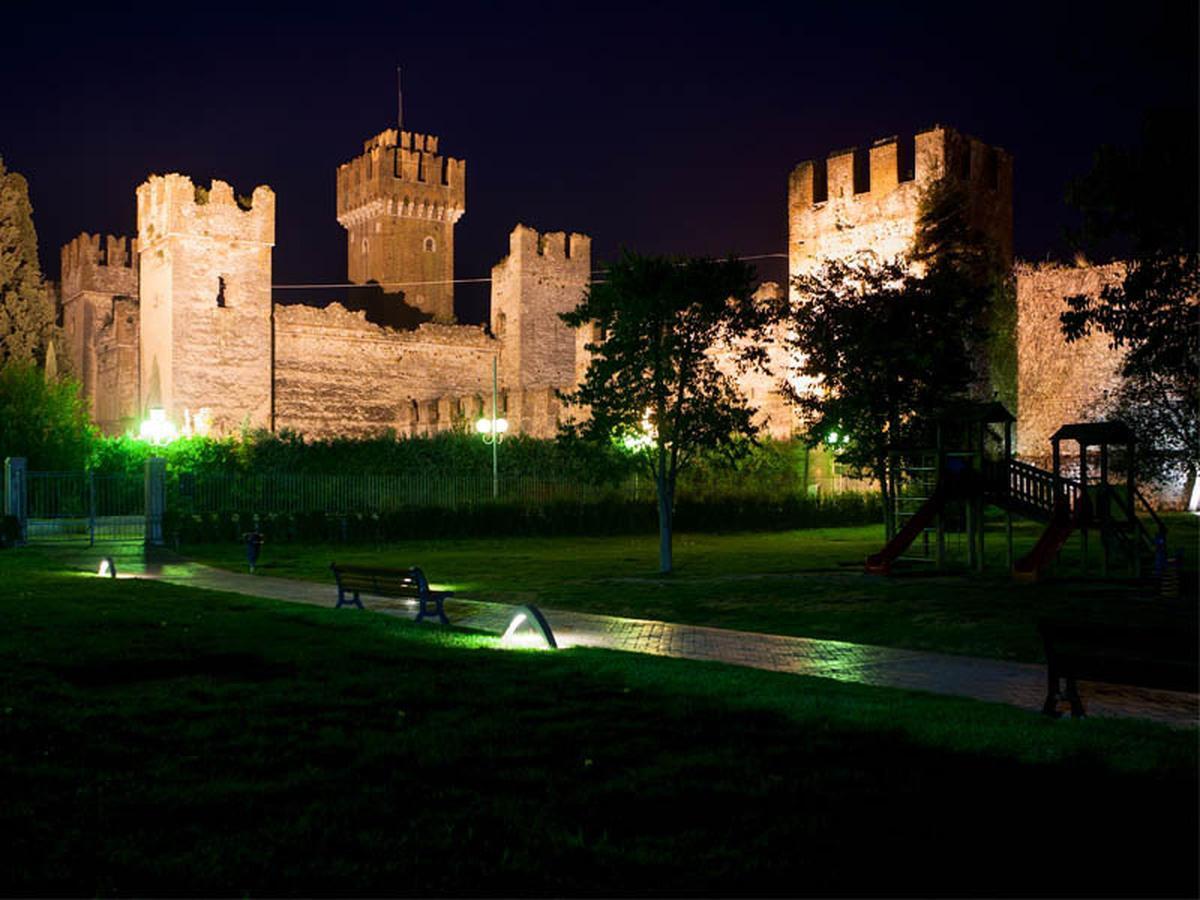
The walls, built to protect Italy’s first Free Commune (983), date back to the Early Middle Ages and defended the castle, whose origins are linked to Roman history, when the village was named Lacisium. The castle was likely rebuilt on Roman foundations during the Middle Ages, around the 11th century, when the area was governed by the Republic of Venice and used as the residence of Venetian magistrates.
The fortifications were designed to protect the inhabitants both from foreign raids and from the claims of the Veronese Turrisendi family, lords of Garda and much of the Giudicaria Gardense. Over the centuries, the castle was repeatedly expanded, destroyed, and restored, passing under the rule of the Scaligeri, the Visconti, the Venetians, the Landsknechts, the French, and the Austrians.
Later, the castle was partly destroyed and used as a quarry for building materials, until Count Burri purchased it and saved it from ruin. He restored the structure and transformed the former castle harbor, which had become a marsh, into the villa’s garden.
The Scaliger Castle has a classic square layout, with five towers and a main keep. At the entrances, the coats of arms of the Scaligeri are still visible, although they were chiselled away by order of Emperor Maximilian in an attempt to ease the resentment of the people of Lazise toward the forceful rule of the Scaliger family.
What remains of the ancient Scaliger Castle is now enclosed within Villa Buri, now Villa Bernini, and is not open to visitors as it is still privately inhabited. However, it is possible to visit the surrounding walls, which are topped with battlements and are well preserved, following a walk that takes about one hour and requires parking outside the fortified perimeter.
Lazise has always had three main gates, equipped with drawbridges and portcullises, which have been restored several times over the centuries. The historic centre is accessed through the Upper Gate, today commonly known as Porta San Zeno. In the medieval walls there are also two other military gates: Porta Lion, named after the Venetian Republic’s lion of Saint Mark that once stood above it and marked the southern entrance, and Porta Nuova, so called because it was the last to be built, though it is still also known as Porta Cansignorio, after Cansignorio della Scala, the ruler of the Scaliger family who built the castle.


 ${item.descriptiveTime && item.descriptiveDate.endsWith(item.descriptiveTime) ? item.descriptiveDate.slice(0, -item.descriptiveTime.length).replace(/[\\s/,-]+$/, '') : item.descriptiveDate}$

 ${item.regionTag}$
 Website